








Italy Travel Guide: The Basics to Know Before You Go
 Italy 5 мин чтения
Italy rewards a little preparation. The trains are fast, the food is everywhere, and the big sights are worth every minute, but a few local habits catch first-time visitors out: tickets that need stamping, cover charges on the bill, and city centres you are not allowed to drive into.
Here are the basics.
When to go
- Spring (April to June) is the sweet spot: warm, green and not yet at peak crowds. Easter week is busy, especially in Rome.
- Summer (July and August) is hot, crowded and expensive on the coast. Many Italians take their own holiday around Ferragosto on 15 August, and some city restaurants and shops close for a week or two around it.
- Autumn (September and October) brings warm seas, the grape harvest and thinner crowds. It is the best time for Tuscany and the lakes.
- Winter is quiet and cheaper in the cities, and it is ski season in the Dolomites and the Alps.
Where first-time visitors go
| Area | Why go | Time to allow |
|---|---|---|
| Rome | The Colosseum, the Forum, the Pantheon, the Vatican Museums | 3–4 days |
| Florence and Tuscany | Renaissance art, then hill towns and vineyards | 3–5 days |
| Venice | Canals, and nothing else like it anywhere | 2 days |
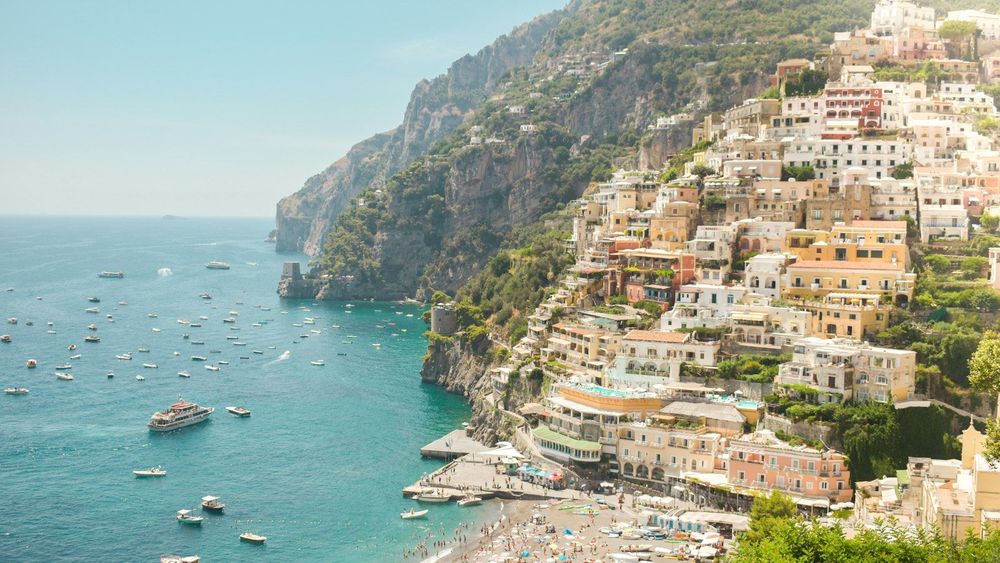
| Amalfi Coast | Cliffside villages, boats, lemons | 3–4 days |
| Milan and the lakes | Fashion, the Duomo, then Como or Garda | 2–4 days |
A classic first trip strings together Rome, Florence and Venice by train in about ten days.
Getting around
Trains are the way to travel between cities. The high-speed lines, run by Trenitalia (Frecciarossa) and Italo, link Milan, Florence, Rome and Naples in a few hours. Book these ahead for the best prices.
Regional trains are cheap and do not need booking. One rule matters: a paper regional ticket must be validated in the small machine on the platform before you board. An unvalidated ticket can earn you a fine, even though you paid.
Driving is great for Tuscany and the south, but most historic centres are ZTL zones (zona a traffico limitato). Cameras photograph every car that enters without a permit, and the fines arrive at your home weeks later, usually through the rental company. Park outside the centre and walk in.
Book ahead
The headline sights sell out, especially from spring to autumn. Book timed tickets online for:
- The Colosseum in Rome
- The Vatican Museums and the Sistine Chapel
- The Uffizi and the Accademia (Michelangelo's David) in Florence
- The Last Supper in Milan, which often sells out weeks in advance
Venice has also charged day-trippers an access fee on its busiest days in recent years. Check the city's official site before you go.
Money, tipping and the bill
- Italy uses the euro. Cards are widely accepted, but carry some cash for small cafés, markets and rural places.
- Many restaurants add a coperto, a small per-person cover charge for bread and the table. It is normal and legal, and it is listed on the menu.
- Tipping is not expected. Rounding up, or leaving a euro or two for good service, is appreciated but not required.
- Coffee is cheaper standing at the bar than sitting at a table, sometimes by a lot.
- Hotels charge a tourist tax per person per night, usually paid at check-in or check-out, separate from your booking.
Everyday basics
- Plugs: types C, F and L, at 230 V. Most European two-pin plugs fit; bring an adapter if yours is from the US, UK or elsewhere.
- Emergency number: 112.
- Churches require covered shoulders and knees, including St Peter's. Carry a light scarf in summer.
- Water: tap water is safe to drink, and Rome's public drinking fountains run all day.
- Pickpockets work the busiest tourist spots and crowded buses and metros, especially in Rome. Keep your phone in a front pocket.
- Opening hours: in smaller towns, shops often close for a long lunch break in the afternoon and reopen in the early evening.
Staying connected in Italy
You will use your phone constantly in Italy: train tickets, timed museum entries, maps through medieval streets, translation at dinner.
A HOAM eSIM for Italy connects to Iliad and Vodafone, and your phone uses whichever is stronger where you are. Coverage is good in the cities and along the main rail lines. It can drop in the mountains and on the more remote stretches of the coast, so download offline maps before a drive.
Crossing borders? Plenty of trips combine Italy with a neighbour. Choose every country you are visiting, such as Italy and Switzerland for the lakes and the Alps, or Italy and Greece for the ferries across the Adriatic. One plan covers them all, at the price of the most expensive country you choose, not the sum.
How much data? A week of maps, messaging, tickets and photo sharing is moderate use, and a mid-sized plan suits most travellers. If you post video every day or use your phone as a hotspot, size up. You can top up from your phone if you run low.
Install the eSIM at home before you fly. The plan starts the first time you use it in Italy, and it stays on your phone afterwards, so your next trip is just a new plan on the same eSIM.
Going to Italy? Choose Italy, and any other countries on your route, on hoamesim.com to see plan sizes and prices.
Частые вопросы
Do I need to validate my train ticket in Italy?
Paper regional train tickets must be validated in the machine on the platform before you board, or you can be fined. Reserved high-speed tickets for a specific train do not need validating.
Should I tip in Italy?
Tipping is not expected. Many restaurants add a small per-person cover charge, the coperto. Rounding up or leaving a euro or two for good service is appreciated but optional.
What is a ZTL in Italy?
A zona a traffico limitato, a restricted traffic zone covering most historic city centres. Cameras record cars that enter without a permit, and fines are sent on later, usually through the rental company.
Which networks does a HOAM eSIM use in Italy?
Iliad and Vodafone. Your phone connects to whichever is stronger where you are.