



Greece Travel Guide: The Basics to Know Before You Go
 Greece 5 мин чтения
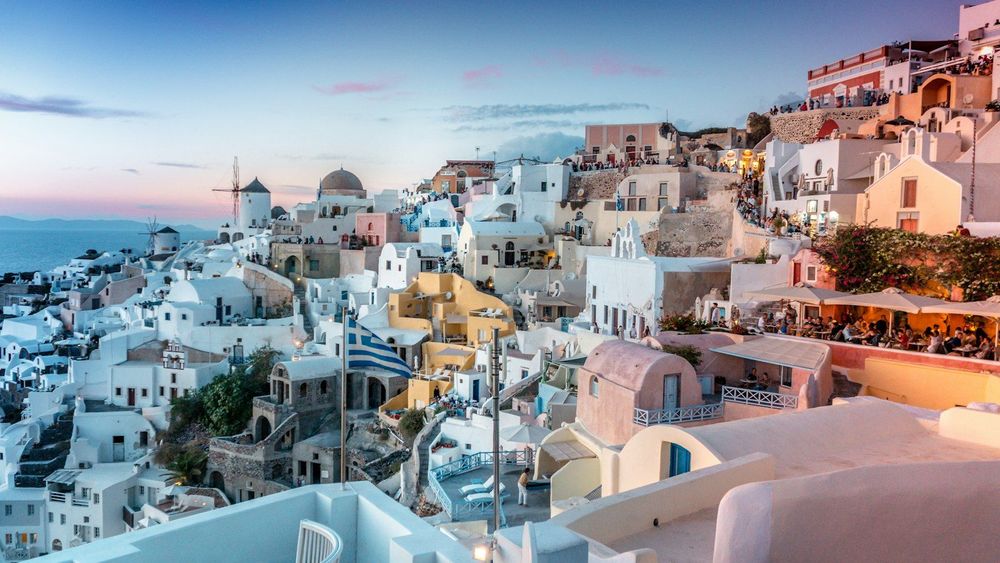
Greece is two trips in one: Athens and the ancient sites on the mainland, and then the islands, more than two hundred of them inhabited, each with its own character. The secret to a good first trip is not trying to see too many of either.
Here are the basics.
When to go
- May, June, September and early October are the best months: warm sea, long days, and far fewer people than in high summer.
- July and August are hot and crowded, and prices peak on the popular islands. This is also when the meltemi, a strong northerly wind, blows across the Aegean and can delay or cancel ferries.
- November to March is quiet. Athens is pleasant, but many island hotels, restaurants and ferry routes close or run a reduced service.
Choosing your islands
The islands come in groups, and ferries run mostly within a group, not between them. Pick one or two groups rather than zig-zagging across the sea.
| Islands | Known for | Good for |
|---|---|---|
| Cyclades (Santorini, Mykonos, Paros, Naxos) | White villages, sunsets, beaches | First-timers, island hopping |
| Crete | Mountains, gorges, food, history | A week or more on one island |
| Ionian (Corfu, Kefalonia, Zakynthos) | Green hills, turquoise coves | Beaches and a slower pace |
| Dodecanese (Rhodes, Kos) | Medieval towns, near Turkey | History and day trips |
| Saronic (Hydra, Aegina) | Close to Athens | A short escape from the city |
A classic first trip is two or three days in Athens, then two islands in the Cyclades, such as Naxos and Santorini or Paros and Mykonos, over about ten days.
Getting around
Ferries are how you move between islands. Fast catamarans are quicker and pricier; the big conventional ferries are slower but steadier in rough seas. In summer, book popular routes ahead, and keep your plans flexible in case the wind cancels a sailing. Most ferries to the Cyclades leave from Piraeus or Rafina, near Athens.
Domestic flights link Athens with the bigger islands in under an hour and are worth it for Crete or Rhodes.
On the islands, local buses cover the main routes. A hired car, scooter or quad gives you the remote beaches. Roads can be narrow and steep, so drive with care.
Book ahead
- The Acropolis uses timed entry tickets. Go at opening time, before the heat and the cruise-ship groups.
- Ferries in July and August, especially on weekends.
- Santorini and Mykonos hotels from June to September, often months in advance.
Money, tipping and the bill
- Greece uses the euro. Cards are widely accepted, but carry some cash for small tavernas, kiosks and remote beaches.
- Tipping is appreciated but modest: rounding up, or around 5–10% at a sit-down meal for good service.
- Hotels charge a per-night tourist tax, paid at your accommodation and separate from your booking.
Everyday basics
- Plugs: types C and F, at 230 V. Bring an adapter if yours is not a European two-pin plug.
- Emergency number: 112.
- Toilets: in many older buildings and on the islands, the plumbing cannot take paper. Use the bin provided; there is usually a sign.
- Water: tap water is fine in Athens. On many islands, locals drink bottled water, so follow their lead.
- Heat: summer afternoons are fierce. Do your sightseeing in the morning, rest in the afternoon, and eat late like the Greeks do.
- Sites and churches: cover your shoulders when entering a monastery or church.
Staying connected in Greece
Your phone does a lot of the work on a Greek trip: ferry tickets, last-minute schedule changes when the wind picks up, maps to a beach down a dirt track, and translating a menu written in Greek.
A HOAM eSIM for Greece connects to Cosmote, Vodafone and Nova, the three Greek networks. Your phone uses whichever is strongest where you are, which matters on the islands, where one network can be weak in a bay that another covers well.
Ferry Wi-Fi is unreliable. It slows to nothing on a full boat and often drops at sea, so your own data is the thing that works when you want to check the next connection.
Day trips across borders? From Rhodes and Kos, boats run to Turkey's coast at Marmaris and Bodrum. Ferries also link western Greece with Italy. Choose every country you will visit, such as Greece and Turkey or Greece and Italy. One plan covers them all, at the price of the most expensive country you choose, not the sum.
How much data? A week or two of maps, ferry apps, messaging and photo sharing is moderate use, and a mid-sized plan suits most travellers. Size up if you post video every evening or work from your laptop over a hotspot. You can top up from your phone if you run low.
Install the eSIM at home before you fly. The plan starts the first time you use it in Greece, and it stays on your phone afterwards, so your next trip is just a new plan on the same eSIM.
Going to Greece? Choose Greece, and any other countries on your route, on hoamesim.com to see plan sizes and prices.
Частые вопросы
What is the best time to visit Greece?
May, June, September and early October offer warm seas, long days and fewer crowds than July and August, when prices peak and strong winds can disrupt ferries.
Do I need to book Greek ferries in advance?
In July and August, yes for popular routes, especially at weekends. Outside summer you can often buy a day or two ahead, but booking early still gives you more choice.
Is ferry Wi-Fi in Greece reliable?
Not very. It slows down on busy sailings and often drops at sea. Your own mobile data is more dependable for checking tickets and schedules.
Which networks does a HOAM eSIM use in Greece?
Cosmote, Vodafone and Nova. Your phone connects to whichever is strongest where you are.