

TL;DR
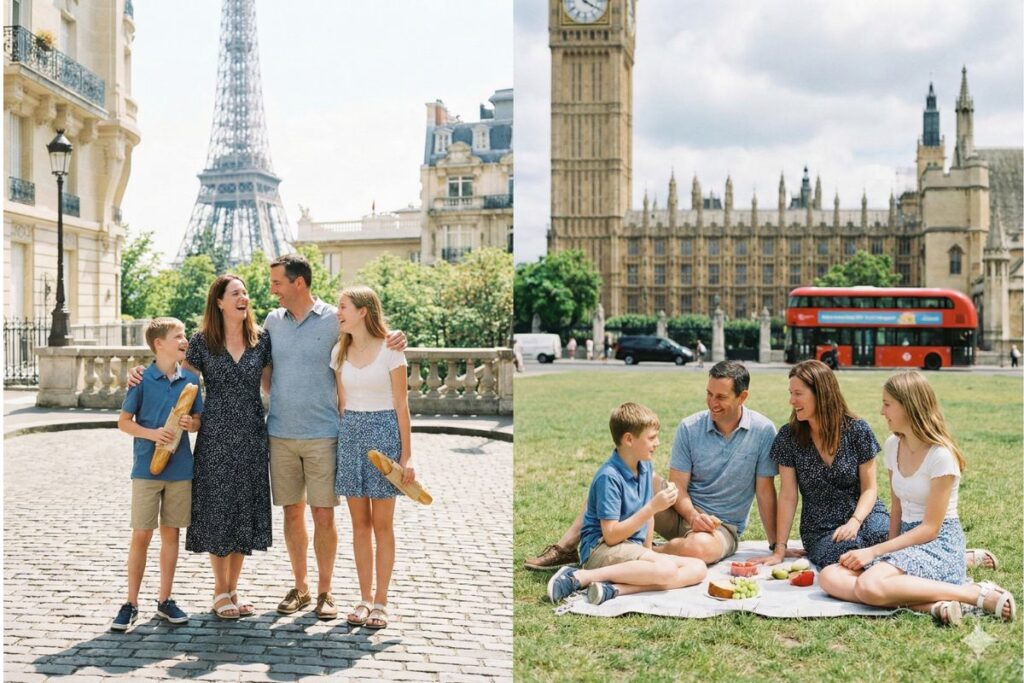
Plan this as four comfortable bases across a month: a major city and a “fresh air” region in France, then the same in the UK. Your days work best when they follow a summer rhythm: one iconic sight early, a hands-on or outdoor activity after, and an easy evening with dessert. For accommodation, combine mid-range city hotels with apartment-style stays for space and laundry. For connectivity, give both adults solid data and hotspot capability, give the 14-year-old enough data for independence and safety, and keep the 10-year-old light on data (or mostly Wi-Fi) unless you want full independence.
The family goal: iconic places, zero burnout
A month in France and the UK can be the best summer holiday your family ever takes or a beautifully photographed endurance test. With a 10-year-old and a 14-year-old, the trick is not “more activities.” The trick is variety and pacing.
France delivers instant wins: famous landmarks, markets that feel like treasure hunts, boat rides, and countryside or coast within easy reach. The UK adds big-city energy, world-class museums that work for kids, and green landscapes that feel like a reset button. Together they create a trip where every week can have a different personality, without creating logistical chaos.
The most reliable way to keep it fun is to treat the month like four mini-holidays, each with its own base and its own theme. That keeps everyone excited and avoids the “another museum” problem.
The best structure for one month: four bases, not ten
For a family of four, four bases is the sweet spot: enough variety to keep teenagers engaged, and enough stability to keep parents sane.
A proven split looks like this:
- France (2 weeks): one major city base for iconic sights and day trips, then a second base that’s either coastal or countryside for slower days.
- UK (2 weeks): one major city base for museums, markets, and shows, then a second base in a greener region for castles, walks, and beach or lake time.
This structure is informative because it solves the hard parts: laundry, sleep, meal predictability, and the constant “where are we going next” negotiation.
France: Weeks 1–2 (Iconic sights + summer coast/countryside)
Week 1: the “big city” week that still feels like a holiday
In your first France week, you want the famous sights, but you also want the kids to feel like they’re doing something, not being dragged around. Plan mornings for your biggest “must-see” site, because lines and heat are easiest early. Then switch to afternoons that are interactive and flexible.
A classic, kid-proof mix includes a major viewpoint experience (the kind that makes everyone say “okay, that’s cool”), a boat ride on the main river, and one museum day that is short and mission-based. Instead of attempting the entire museum, pick a theme: “find the strangest object,” “best painting title,” or “most dramatic sculpture.” It turns culture into a game, and it keeps the 14-year-old from checking out.
Summer cities also require parks. Not as an afterthought, but as daily oxygen. Build in a park stop most days, picnic, playground, or simply shade, because it’s the difference between a fun trip and a tired family.
Evenings should be light: a neighborhood stroll, street performers, a simple dinner, then dessert. You can repeat that every day without boredom because the neighborhoods and the snacks change.
Week 2: the “fresh air” week that becomes everyone’s favorite
Move out of the city for your second France week. This is where the holiday becomes easy. A coastal base gives you beach days and water activities; a countryside base gives you castles, bike routes, and quiet towns where kids can roam a bit more freely.
This week should feel less scheduled, but still structured. The easiest summer formula is: morning activity (beach, bike ride, castle), long lunch, and a slower afternoon. You can add one “adrenaline-lite” day, an adventure park, kayaking, a guided nature experience, something that feels special but doesn’t require extreme planning.
Food is also easier here. Markets become snack missions. Bakeries become breakfast rituals. A crepe or pastry “rating system” becomes a running joke that keeps everyone engaged.
UK: Weeks 3–4 (Big city energy + green landscapes)
Week 3: a city week built for kids and teens
For the UK city week, lean into variety and give the 14-year-old more agency. This is the week where museums can shine, especially interactive or topic-driven ones, because they’re often designed with families in mind. You can do a museum morning, then switch to a food market lunch where everyone chooses their own meal, which instantly reduces friction.
Add one experience that feels “grown up” for the kids: a theatre night or a major evening show. For a 10-year-old it feels exciting; for a 14-year-old it feels like a real event, not a family outing. Balance that with parks and light walking routes so nobody feels trapped indoors all day.
A good UK city day often looks like this: one major sight early, one museum or guided experience, a market or street-food lunch, then a park or river walk. Finish with something fun and predictable: dessert and a short evening stroll.
Week 4: end on nature, castles, and coastal air
Your final week is where you “end strong” without exhausting everyone. Choose a base that gives you easy access to scenic walks, historic towns, and castles. Keep hikes flexible, routes you can shorten, so the 10-year-old can succeed and the 14-year-old doesn’t feel babied.
This is also the right week for a “finale day”: a theme-park-style day, a wildlife park, or a full-day scenic outing with a special dinner afterward. Ending with a celebratory day helps the trip land emotionally; everyone leaves feeling like the holiday had a climax, not just a last checkout.
Culinary adventures: keep it playful, not formal
With kids, food planning is not about restaurants, it’s about momentum.
In France, turn food into small rituals: bakery breakfasts, market picnics, and one nice meal where everyone dresses up a little (even if it’s casual). In the UK, use food markets and casual “choose your own” lunches to keep the peace and keep the day moving. Across both countries, schedule one “special dinner” per week and keep the rest intentionally easy. You want the family to remember the fun, not the negotiations.
If your kids like challenges, add a simple food game: each person chooses one local snack per week that everyone must try. It’s low stakes, it’s funny, and it creates built-in memories.
Where to sleep (levels only): what works best for a family of four
For a month, accommodation choice matters more than almost anything else because it controls sleep, laundry, and morning mood.
In big cities, mid-range hotels (3–4 star) are usually the easiest option because location saves time and energy. Look for family rooms or connecting rooms, strong air conditioning, good breakfast options, and quiet at night.
For your second week in each country, coast or countryside, apartment-style stays tend to win. They give you a kitchen for simple breakfasts, laundry for sandy clothes, and enough space so the 14-year-old can decompress. For families, space is not luxury; it’s stability.
A premium level stay can be added for 2–3 nights as a “treat segment,” especially if it includes features families love in summer: a pool, spa-style facilities, or just exceptionally easy logistics.
eSIM for a family of four: data plans that fit real travel behavior
On a family trip, connectivity is not about scrolling. It’s navigation, tickets, translation, coordination in crowded places, and “I’m at the next shop” messages. With a 10-year-old and a 14-year-old, it’s also safety and independence management.
The cleanest approach is to treat eSIM as part of your risk management: every adult should be fully functional independently, the 14-year-old should have enough data to communicate and navigate, and the 10-year-old can be light-data unless you prefer full independence.
A practical setup for one month across France and the UK looks like this:
Adult 1 (primary navigator + bookings): about 30–50 GB for the month, because this device runs maps constantly, handles reservations, and often becomes the backup hotspot.
Adult 2 (second adult redundancy): about 15–30 GB, enough for independent navigation and coordination if you split up.
14-year-old: about 10–20 GB, which covers messaging, social use, and light navigation without running out halfway through the month. This is also the child most likely to roam a bit more independently.
10-year-old: about 3–8 GB (or mostly Wi-Fi), generally sufficient for messaging, occasional entertainment, and limited supervised use. If you want them fully independent, raise this, otherwise keep it light.
One important operational detail: many “Europe” eSIM plans do not automatically include the UK. For a France + UK trip, choose a plan that explicitly covers both countries, supports top-ups, and (for at least one adult) allows hotspot.
For some of the package recommendations you will have to top up your package.
FAQ
How should we split the month between France and the UK?
A two-and-two split is simplest and most relaxing: two weeks in France and two weeks in the UK. It gives you enough time for both a city week and a fresh-air week in each country.
How many stops is too many for a family holiday?
If you’re moving every 2–3 nights for a month, it will feel like logistics. Four bases total is the most family-friendly structure: stable enough for routines, varied enough for excitement.
What’s the best accommodation type for a family of four in summer?
Use mid-range hotels in cities for location and convenience, then switch to apartment-style stays for your coast/countryside weeks for space, laundry, and calmer mornings.
How do we keep both a 10-year-old and a 14-year-old happy?
Give the trip a daily rhythm: one iconic thing early, one hands-on or outdoor activity after, then an easy evening with dessert. Let the 14-year-old choose a few activities and give the 10-year-old predictable fun (parks, boats, beaches, snack missions).
Do the kids need eSIMs?
For a smooth trip, the 14-year-old should have an eSIM for independence and safety messaging. The 10-year-old can have a small plan or rely mostly on Wi-Fi/hotspot, depending on how independent you want them to be.
How much data should each person have for one month?
A practical split for this itinerary is: Adult 1: 30–50 GB; Adult 2: 15–30 GB; 14-year-old: 10–20 GB; 10-year-old: 3–8 GB.
(For some of the package recommendations you will have to top up your package)
What’s the most common mistake on a month-long family summer trip?
Over-scheduling the days and under-scheduling recovery. You need parks, shade, and “nothing planned” time to keep the trip fun.